
You’ve had dosa. You’ve had idli. But if you haven’t tried appam or idiyappam yet you’re missing two of the most satisfying dishes South Indian cuisine has ever produced. The problem? Most people living in London don’t even know these dishes exist, let alone where to find them made properly.
That ends here. This is your practical guide to understanding appam and idiyappam, what they are, why they matter, and exactly where to get them authentic in Wembley.
So, What Actually Is Appam?
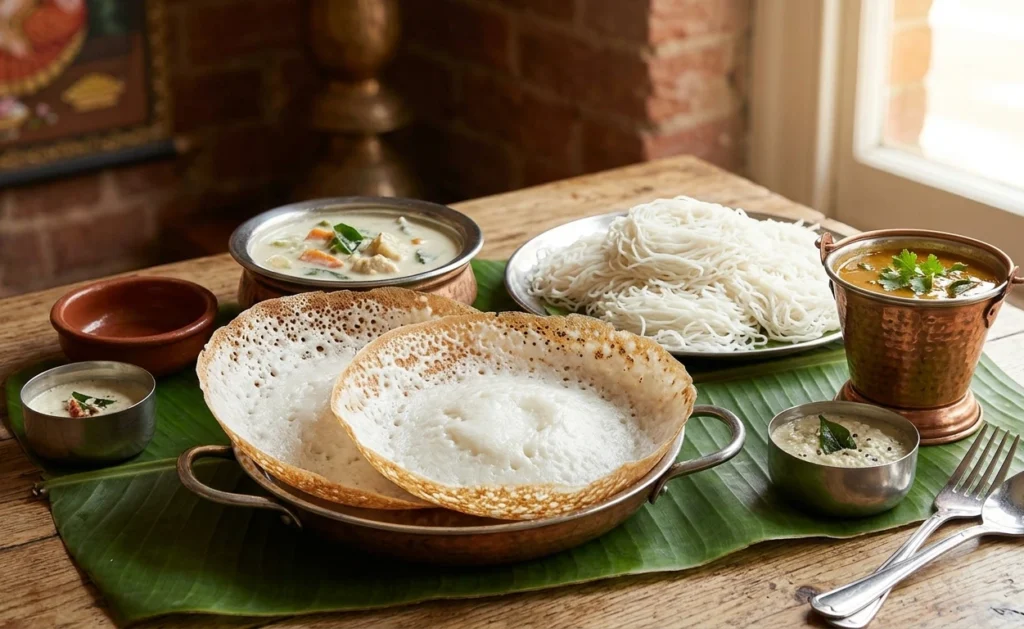
Here’s the honest truth: appam looks deceptively simple, but it’s one of the hardest South Indian dishes to get right. It’s a bowl-shaped rice pancake fermented overnight with coconut milk cooked in a small rounded pan called an appachatti. The edges turn thin and lacy, slightly crisp. The centre stays thick, soft, and almost cloud-like.
Appam has been a staple of Kerala and Tamil Nadu kitchens for centuries. It’s mentioned in ancient Tamil Sangam literature, which tells you just how deep the roots go. What makes it stand apart from dosa is the fermentation process and the coconut milk in the batter that’s what gives it the faint sweetness and the delicate texture you simply cannot replicate any other way.
The classic pairing for appam in Wembley is appam and stew, a mild, coconut milk-based vegetable kurma that soaks into the soft centre perfectly. One bite, and it makes complete sense.
And What About Idiyappam?
Idiyappam or string hoppers, as the British-Sri Lankan community calls them, is steamed rice noodle. That’s it. No frying, no heavy spicing, no oil. Rice flour is pressed through a mould into thin strands, coiled into soft nests, and steamed until just done.
The result is almost impossibly light. Idiyappam has virtually no flavour of its own which is exactly the point. Every strand soaks up whatever you serve it with. Pair it with veg kurma and the noodles carry that fragrant coconut stew into every mouthful. It’s a dish built on restraint, and that restraint is what makes it so deeply comforting.
Idiyappam in London is rarer than it should be. Most restaurants that claim to serve it either run out by mid-morning or get the texture wrong, too dense, too dry, or made with instant powder instead of fresh rice flour. If you’ve had a bad version before, don’t let that be your last impression.
It’s 100% gluten-free, naturally vegan, and genuinely easy on digestion three things that make it one of the most practical South Indian breakfast Wembley options for anyone with dietary considerations.
Why Most People Can’t Find It Done Properly
This is the frustrating part. South Indian food Wembley has grown significantly over the years but appam and idiyappam still get overlooked, even by restaurants that should know better. Here’s why:
- Appam batter needs overnight fermentation. Shortcuts produce flat, rubbery pancakes with none of the lacy texture.
- Idiyappam pressed from instant powder tastes hollow. Freshly made from roasted rice flour is in a completely different league.
- The pairing matters as much as the dish. Appam with a generic curry is mediocre. Appam with properly made veg kurma is a different experience entirely.
This is why so many people who grew up eating these dishes in Tamil Nadu or Kerala feel genuinely let down when they order them elsewhere in London. You know what they’re supposed to taste like and anything less than that feels like a waste of a meal.
What to Order and How to Eat It
If you’re new to these dishes, here’s exactly what to do:
- Start with appam and veg kurma. Tear the soft centre of the appam and spoon the kurma over it. Let it soak for a few seconds before you eat. Don’t rush it.
- Try idiyappam with coconut stew. Mix the noodle nests gently into the kurma. Each strand should be coated. Eat it while it’s hot, idiyappam firms up quickly as it cools.
- Order rasam on the side. South India’s peppery tamarind broth is the perfect palate cleanser between bites. It’s also one of the best natural digestives you’ll find on any Indian menu.
These are breakfast dishes, yes but they work equally well for a light dinner. The combination is filling without being heavy, which is part of why generations of South Indian families have eaten them this way for centuries.
Where to Go in Wembley
If you want appam and idiyappam made the way they’re supposed to be properly fermented, freshly prepared, served with veg kurma made from scratch the answer is closer than you think.
Stop settling for the same order every time. There’s a whole other side of South Indian food in Wembley waiting for you and appam is the best place to start.