
South Indian cuisine has gifted the world two iconic dishes. Sambar and rasam sit on nearly every traditional South Indian plate. Yet, most people outside Tamil Nadu, Karnataka, Andhra Pradesh, and Kerala use the two names interchangeably. They are not the same dish. Understanding what sets them apart will change the way you experience every South Indian meal going forward.
What Exactly Is Sambar And Why Is It a Staple?
Sambar is a thick, lentil-based stew. It is made primarily from toor dal (split pigeon peas), cooked until completely soft and mashed into the base. Vegetables are a non-negotiable part of every sambar recipe. Drumstick (murungakkai), small brinjal (kathirikkai), pearl onions, tomatoes, carrots, and raw bananas are all common additions. The distinct yellow colour of sambar comes from turmeric and the deep orange hue of cooked toor dal.
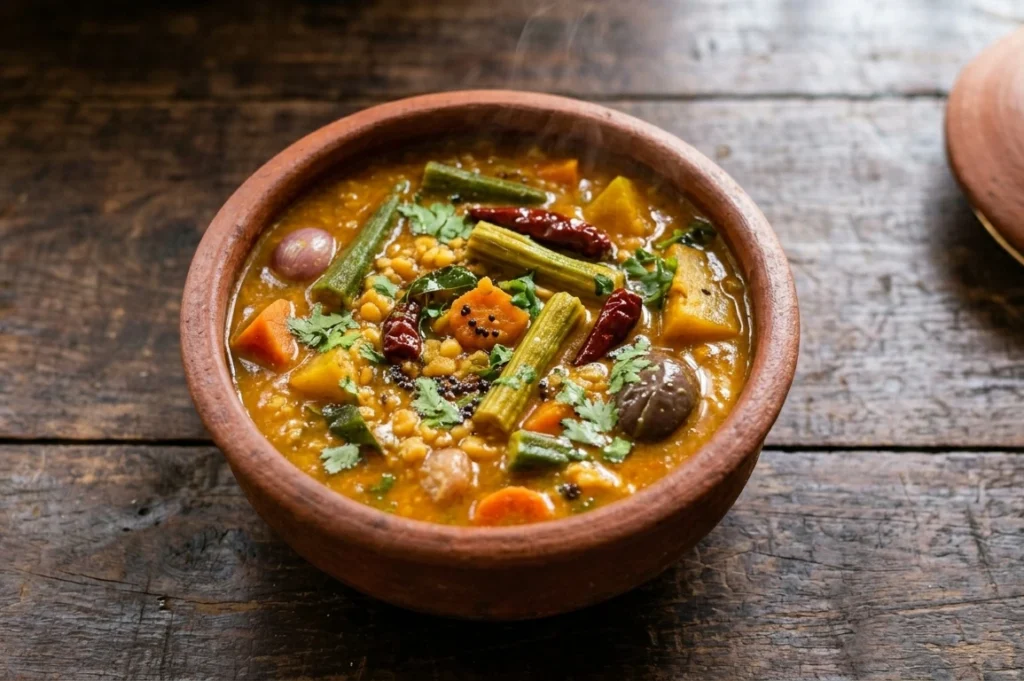
The spice blend for sambar is called sambar masala or sambar powder. It typically contains coriander seeds, dried red chillies, fenugreek (methi) seeds, cumin, curry leaves, and black pepper, dry-roasted and ground together. The addition of methi and curry leaves gives sambar its signature earthy, slightly bitter undertone. Tamarind pulp adds the essential sour note. A tempering of mustard seeds, dried red chillies, asafoetida (hing), and curry leaves in oil or ghee finishes the dish.
The texture of sambar is rich and thick, similar to a hearty stew. It is hearty enough to serve as a main accompaniment. It pairs perfectly with idli, vada, dosa, and steamed rice. A standard serving of sambar provides protein from the dal, fibre from the vegetables, and a broad spectrum of micronutrients. It is filling, deeply flavoured, and nutritionally complete.
What Is Rasam And How Is It Different at a Glance?
Rasam is a thin, tangy, peppery broth. The term “rasam” means “juice” or “essence” in Tamil and Sanskrit. The dish lives up to its name, it is the extracted essence of tamarind, tomatoes, and spices, cooked into a light, watery liquid. Rasam is NOT a stew. It is closer to a warm, aromatic soup.
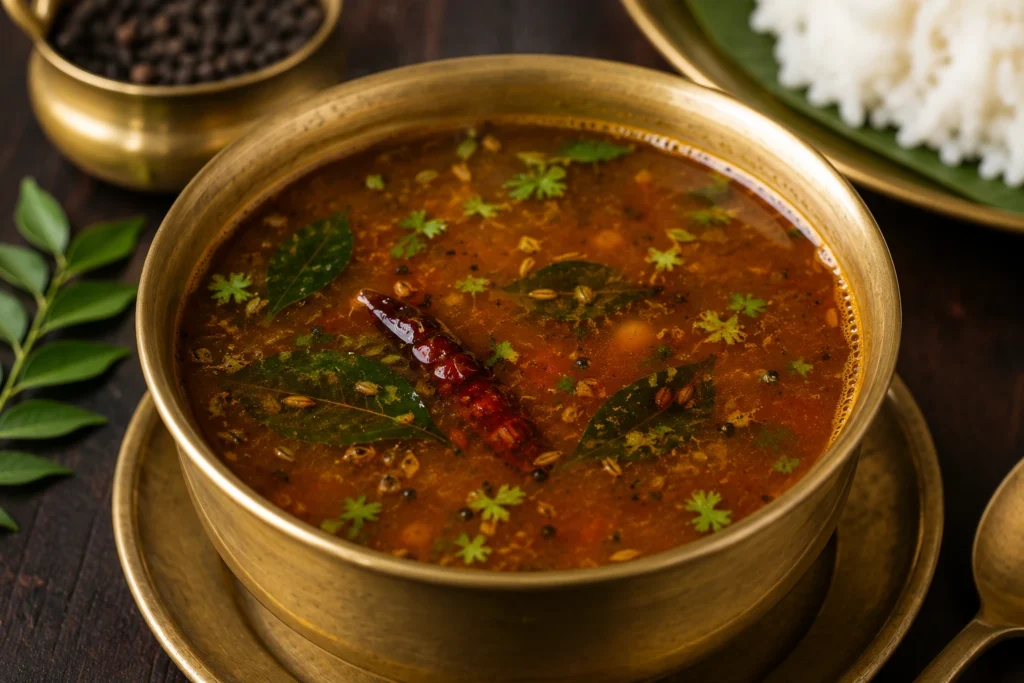
The key distinction lies in consistency. Rasam is thin enough to pour like water. Some traditional recipes use a small amount of cooked toor dal to add a subtle body, but many versions skip it entirely. The absence of dal is what makes rasam fundamentally different from sambar.
Rasam masala is a separate spice blend from sambar powder. Black pepper (milagu) and cumin (jeera) dominate the rasam powder profile. This is the reason rasam delivers a sharp, pungent heat at the back of the throat very different from the rounded, complex spice of sambar. Garlic, dried red chillies, and asafoetida round out the blend. Tamarind and tomatoes form the acidic base. The overall flavour of rasam is described as tangy, fiery, and intensely aromatic.
How do the ingredients compare?
The ingredient split reveals how different these two dishes truly are:
Sambar includes:
- Toor dal (cooked and mashed, always present)
- Multiple vegetables (drumstick, brinjal, onion, carrot, tomato)
- Sambar masala (coriander, red chilli, fenugreek, curry leaves)
- Tamarind pulp
- Mustard seed, hing, curry leaf tempering
Rasam includes:
- Little to no dal (optional)
- No vegetables (except occasional drumstick or tomato)
- Rasam masala (black pepper, cumin dominant)
- Tamarind water or tomato juice
- Garlic, hing, and mustard seed tempering
The spice profiles are distinct enough that rasam powder cannot substitute for sambar powder and vice versa. Rasam powder is coarsely ground because the goal is a clear, flavourful broth, fine powder would make it cloudy and muddy the taste.
When Should You Eat Sambar vs Rasam During a Meal?
The order of service in a traditional South Indian meal follows a clear logic. Sambar comes first or mid-meal as the primary accompaniment. It is the nutritive backbone of the plate.
Rasam is typically served after sambar in a traditional Tamil full meal (virundhu sappadu). It acts as a digestive transition between the heavier sambar-rice and the lighter curd-rice that follows. Rasam is also consumed solo as a warm drink especially during cold, rainy weather or when someone has a cold or sore throat.
Discover the authentic order of dishes on the Anandha Bhavan menu, where every item follows traditional South Indian balance.
This sequence matters because sambar is heavy and filling, while rasam is light and stimulating. Eating rasam before sambar would dull the appetite. Eating sambar after rasam would feel anticlimactic. The traditional order exists for good reason.
What Are the Health Benefits of Each Dish?
Sambar health benefits:
- Rich in plant-based protein from toor dal.
- High fibre content from both dal and mixed vegetables.
- Provides iron, potassium, magnesium, and folate.
- Turmeric offers anti-inflammatory curcumin.
- The combination of dal and tamarind improves iron absorption.
Rasam health benefits: Rasam’s ingredients tamarind, black pepper, cumin, and asafoetida are powerful digestive aids backed by traditional Ayurvedic usage. Black pepper helps improve enzyme production for digestion. Cumin and asafoetida carry carminative properties that relieve bloating and gas. Tamarind provides dietary fibre that eases constipation.
During monsoon and winter seasons, rasam is turned to as a natural remedy for colds and flu. It soothes sore throats, opens sinus passages, and delivers vitamins A, C, thiamin, and folic acid. Garlic strengthens immune response. Black pepper’s piperine content has been studied for its antioxidant and anti-cancer properties.
Rasam is genuinely medicinal, not just flavourful. South Indian households have served it as a natural remedy for centuries, and modern nutritional science continues to validate that tradition.
Are There Different Varieties of Sambar and Rasam?
Both dishes have extensive regional and household variations. This is where South Indian cuisine reveals its extraordinary depth.
Popular sambar varieties:
- Vengaya sambar (pearl onion sambar) classic Tamil Nadu style
- Idli sambar slightly thinner, lighter on vegetables
- Hotel-style sambar uses coconut in the masala base
- Udupi sambar Karnataka style, sweeter, uses jaggery
Popular rasam varieties:
- Milagu rasam (pepper rasam) maximum black pepper, strong cold remedy
- Tomato rasam lighter, brighter, less tamarind
- Garlic rasam (poondu rasam) intense immunity boost
- Lemon rasam (elumichai rasam) tangy, no tamarind, digestion-focused
- Pineapple rasam Tamil Brahmin specialty, sweet-sour-peppery
Each variety carries its own flavour logic and serves a specific purpose. A pepper rasam on a rainy day is not interchangeable with a lemon rasam served at a summer wedding feast.
Which One Should You Order at a South Indian Restaurant?
Order sambar if you want a full, satisfying meal experience. It pairs with everything idli, vada, plain dosa, masala dosa, uthappam, and rice. It is the everyday anchor of South Indian food.
Order rasam or ask for it in addition to sambar if you want the complete traditional experience. Sip it like soup. Pour it over plain rice in the second round. Let it cleanse the palate after a heavier serving of sambar rice.
The authentic South Indian dining experience includes both, served in sequence. Settling for only one means missing half the story.
For a genuinely traditional South Indian meal in Chennai, visit Anandha Bhavan where sambar and rasam are made fresh daily with time-honoured recipes and authentic spice blends.
FAQs
What is the main difference between sambar and rasam?
Sambar is a thick lentil-and-vegetable stew, while rasam is a thin, peppery tamarind or tomato broth. Sambar uses sambar masala; rasam uses its own distinct rasam masala with dominant black pepper and cumin.
Can I use sambar powder to make rasam?
No. Sambar powder and rasam powder have different spice ratios and flavour profiles. Using one in place of the other will produce an inauthentic result and muddy the intended taste.
Is rasam good for digestion?
Yes. Black pepper, cumin, tamarind, and asafoetida in rasam are recognised digestive aids. They stimulate digestive enzymes, relieve bloating, and support gut health.
Which is healthier, sambar or rasam?
Both are nutritious in different ways. Sambar provides protein, fibre, and minerals from dal and vegetables. Rasam provides antioxidants, digestive benefits, and immunity support from its medicinal spice blend.
Is rasam a soup or a curry?
Rasam is closest to a soup. It is too thin to qualify as a curry and too spiced and tangy to be a plain broth. It occupies its own unique category in South Indian cuisine.
What vegetables go into sambar?
Drumstick (murungakkai), pearl onions, brinjal (eggplant), tomato, carrot, raw banana, and yam are all traditional sambar vegetables. The choice of vegetable changes the dish’s name and flavour.
Can I drink rasam on its own without rice?
Absolutely. Rasam is traditionally sipped as a warm drink, especially during illness, cold weather, or as a pre-meal digestive appetiser. It needs no rice to be enjoyed.