
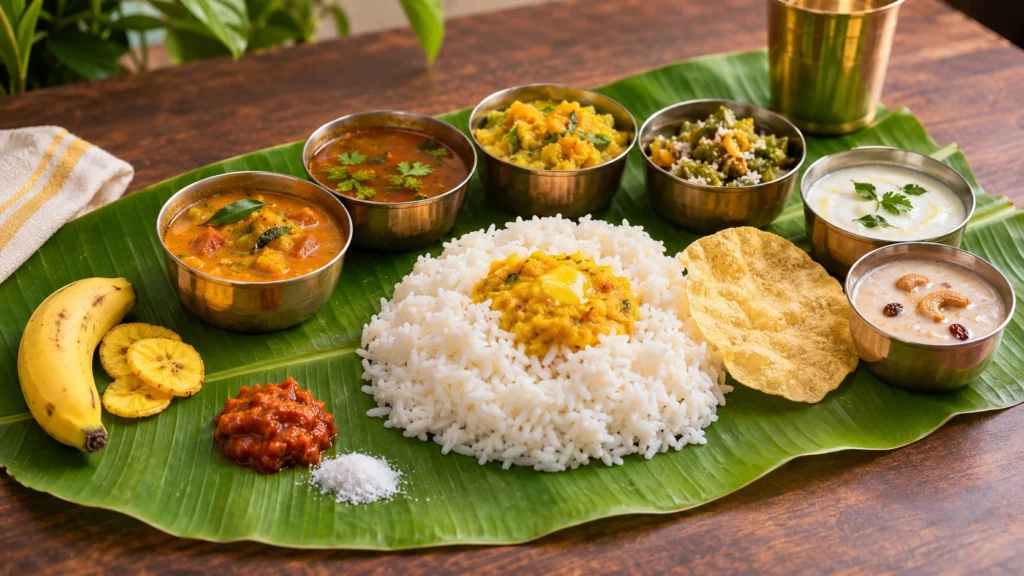
Sit down to your first South Indian vegetarian meal and you may wonder where to begin. A banana leaf, a mound of rice and a row of small servings can feel like a puzzle. The good news is that it follows a simple logic. A South Indian vegetarian meal is a rice-based meal served with lentil dishes, vegetable sides, curd and a sweet, with no meat or fish. This guide explains each part, the order of eating and how a South Indian vegetarian restaurant in Wembley serves it today.
What Is a South Indian Vegetarian Meal?
A South Indian vegetarian meal is a full lunch built around steamed rice. Many small dishes share the leaf, so every mouthful can taste different. Families in Tamil Nadu, Kerala, Karnataka and Andhra Pradesh each add their own touches to this style of Indian vegetarian cuisine.
In Tamil homes, the traditional meal is called sappadu. In Kerala, the festive version is the sadhya, which means “feast” in Malayalam. A sadhya can have fewer than 10 dishes or 30 or more, depending on the occasion.
What Are the Main Components of a South Indian Meal?
Every South Indian meal has a few fixed parts. Each one has a job: some bring comfort, some bring tang and some bring crunch. The table below lists the South Indian food components you will meet most often.
| Component | What it is | Its role |
| Rice | Steamed rice, the centre of the meal | Base for every other dish |
| Paruppu and ghee | Cooked lentils (dal) with a spoon of ghee | Gentle first course |
| Sambar | Lentil and vegetable stew with tamarind | Hearty partner for rice |
| Rasam | Thin, peppery tamarind broth | Tangy course, served to aid digestion |
| Poriyal | Stir-fried or steamed vegetables with coconut | Dry side with texture |
| Kootu | Lentils cooked with vegetables and coconut | Soft, mild side |
| Curd or buttermilk | Plain yogurt or thin buttermilk | Cooling final course |
| Pickle and papad | Spicy pickle and crisp lentil wafer | Sharp, crunchy accents |
| Payasam or sweet | Milk or jaggery dessert | Sweet finish |
Sambar and rasam are often mixed up, even by regular diners. Our guide to the difference between sambar and rasam shows how to tell them apart.
How Is a Traditional Vegetarian Meal Served?
Serving follows a set pattern, especially at weddings and festivals. Details change slightly from region to region, but the flow stays similar. Hosts who plan a big celebration often choose South Indian vegetarian catering for weddings and parties so every course arrives in the right order.
The meal is traditionally served on a fresh banana leaf. Salt, pickle, papad and the dry vegetable sides go on first, and rice sits in the centre. Then the courses arrive one by one:
- Rice with dal and ghee.
- Rice with sambar, eaten with poriyal or kootu.
- Rice with rasam.
- Payasam, the sweet course.
- Curd rice or buttermilk to finish.
The serving order can vary slightly by region, and it also differs from one family to another, so do not worry about getting it exactly right.
What Should a First-Time Diner Know?
Eating this meal is relaxed, not formal. Most people eat with the right hand, mixing a little rice with each dish before every bite. Start with the milder dishes and keep the spicy pickle for small tastes. Ask for a little more rice if you want extra sambar or rasam. If you are unsure about an ingredient, ask. Good restaurants are happy to explain each dish, and a short chat often makes the meal more enjoyable.
How Do Regional Meals Differ?
South India is not one kitchen. The same rice-and-sambar idea changes from state to state.
- Tamil Nadu: rice, paruppu, sambar, rasam, poriyal, kootu and curd, often with vadai and payasam on festive days.
- Kerala: a sadhya includes dishes such as sambar, avial, olan, thoran, erissery, kalan, rasam, papadum, banana chips, pickles and payasam.
- Karnataka: a one-bowl dish like bisi bele bath, a hot rice and lentil mix cooked with tamarind and ghee, often joins the meal.
Where Can You Enjoy a South Indian Meal in London?
Many people in London miss a proper South Indian lunch. Anandha Bhavan in Wembley serves two meal options. Its Business Lunch South has rice, sambar, rasam, poriyal, curd and dessert. The AB Special South Indian Meals adds kootu, papad and sweets. You can see both among the South Indian meals on the restaurant menu. Meals of this kind are usually served at lunchtime, so call ahead if you want one in the evening.
Vegan and Jain diners are welcome too. Ghee, curd and payasam contain dairy, so tell the team in advance and they will adjust the dishes. You can also read customer reviews on Google before you visit.
FAQs
Is every South Indian meal vegetarian?
No. Some regions cook meat and fish dishes. However, festive feasts such as the Onam sadhya are traditionally vegetarian feasts served on a banana leaf.
Is a South Indian vegetarian meal vegan?
Not by default. Rice, sambar, rasam and poriyal can be plant-based, but ghee, curd and payasam use dairy. Ask for dairy-free versions.
Conclusion
A South Indian vegetarian meal is simple once you know its parts. Rice is the base, sambar and rasam give flavour, poriyal and kootu add vegetables, and curd and a sweet close the meal. Eat the courses in order, mix each one with rice, and take your time.
Ready to try a traditional vegetarian meal? Visit Anandha Bhavan at 545 High Rd, Wembley, or call +44 79435 56296 to ask about today’s meal and catering for your next event.